What Actually Happens When a Starter Motor Gets Replaced on Your Car
That Clicking Sound Is Trying to Tell You Something
Most people notice a starter problem before they fully understand what it is. You turn the key or press the button, and instead of the engine cranking over, you get a rapid clicking sound, a single heavy clunk, or nothing at all. Sometimes the car started fine yesterday. Sometimes it has been getting slower and slower to crank for weeks. Either way, the starter motor is usually the first suspect worth checking.
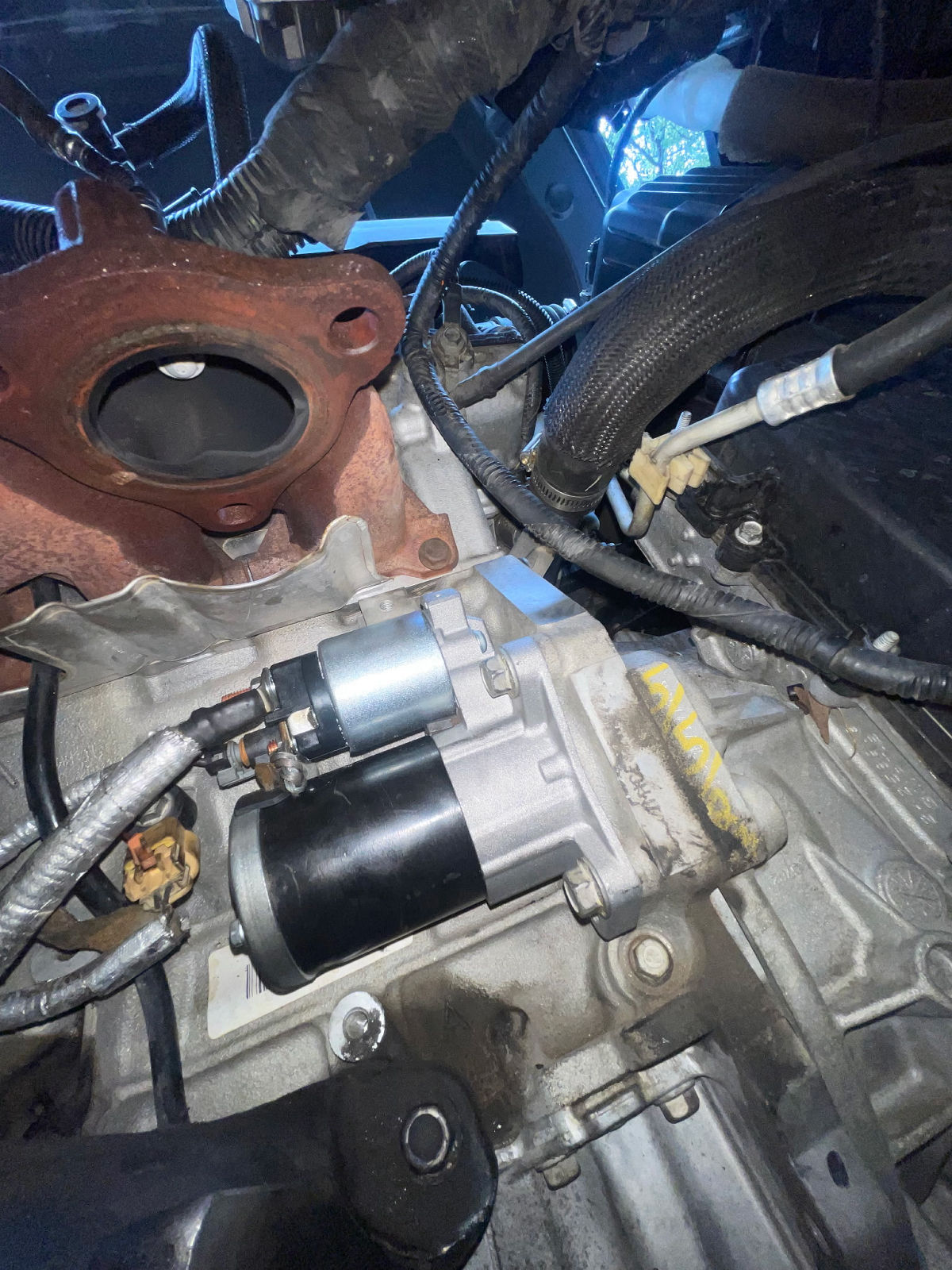
The starter is a small electric motor bolted to the engine block. Its only job is to spin the engine fast enough to get combustion going. When it works, you never think about it. When it fails, you are not going anywhere.
How to Tell the Difference Between a Bad Starter and a Dead Battery
This is the question that trips people up most often. Both problems can leave you with a car that will not start, but they have different causes and different fixes.
Signs pointing to the starter
If your headlights are bright and your interior lights come on normally but the engine still will not crank, that is a strong signal the battery has enough charge to power accessories but the starter itself is not engaging. A single loud click when you turn the key is another common sign. So is the engine cranking slowly and then stopping, especially if jump-starting does not help much.
Signs pointing to the battery
If everything electrical seems dim or sluggish, the battery is more likely the problem. Jump-starting a bad battery usually gets the car running. Jump-starting a bad starter usually does not, because the issue is mechanical, not a lack of charge.
There are also cases where both are worn out at the same time, especially on older vehicles. A proper diagnosis matters before you replace anything.
What the Replacement Process Actually Looks Like
The photo at the top of this post shows exactly what this job involves. You can see a technician positioning a new starter motor against the engine block, with both hands guiding it into place. The rusted exhaust manifold and surrounding components tell you this is not a new vehicle. That is actually the more common scenario. Starters on older, higher-mileage vehicles wear out from years of use, heat cycles, and vibration.
The job itself requires disconnecting the battery first, which is non-negotiable any time you are working near the starter. From there, the old unit gets unbolted and the electrical connections are removed. On some vehicles this is straightforward. On others, the starter is buried under intake components, heat shields, or other hardware that has to come off first. The replacement goes in the reverse order, and once everything is torqued down and reconnected, the battery gets hooked back up and the car gets tested.
A mobile mechanic can do this job in your driveway or at your workplace. There is no tow truck involved, and you do not have to figure out how to get a car that will not start to a shop across town.
Why Starter Problems Get Ignored Until It Is Too Late
Starters often fail gradually. Slow cranking gets written off as normal. That one morning it would not start gets blamed on the cold. People keep driving until the day it just does not start at all, usually somewhere inconvenient.
If your car has been cranking slower than usual, or if you have had a few moments where it hesitated before starting, it is worth having someone look at the starter solenoid and connections before you end up stranded. Catching it early is a lot less stressful than dealing with it in a parking lot.
The team at DFW Mobile Auto Mechanic Pros has been handling starter replacements and electrical diagnostics across the Fort Worth area since 2012. If your car is showing any of these symptoms and you want someone to take a look without the hassle of a tow, give them a call at (817) 966-0057. They are available 24 hours and come to wherever the car is sitting.
Find us on Google · More mobile mechanic tips Call (817) 966-0057 anytime.


Comments
Post a Comment