How to Tell If Your Tie Rods Are Worn Before Your Steering Gets Dangerous
What a Worn Tie Rod Actually Looks Like
The photo above shows exactly the kind of thing most drivers never think to look at until something goes wrong. That front-end suspension component with visible play and surface deterioration is a tie rod end that has seen better days. The wear is not subtle. There is looseness where there should be a solid, tight connection, and the outer casing shows the kind of breakdown that happens when a part has been under stress for too long without inspection.
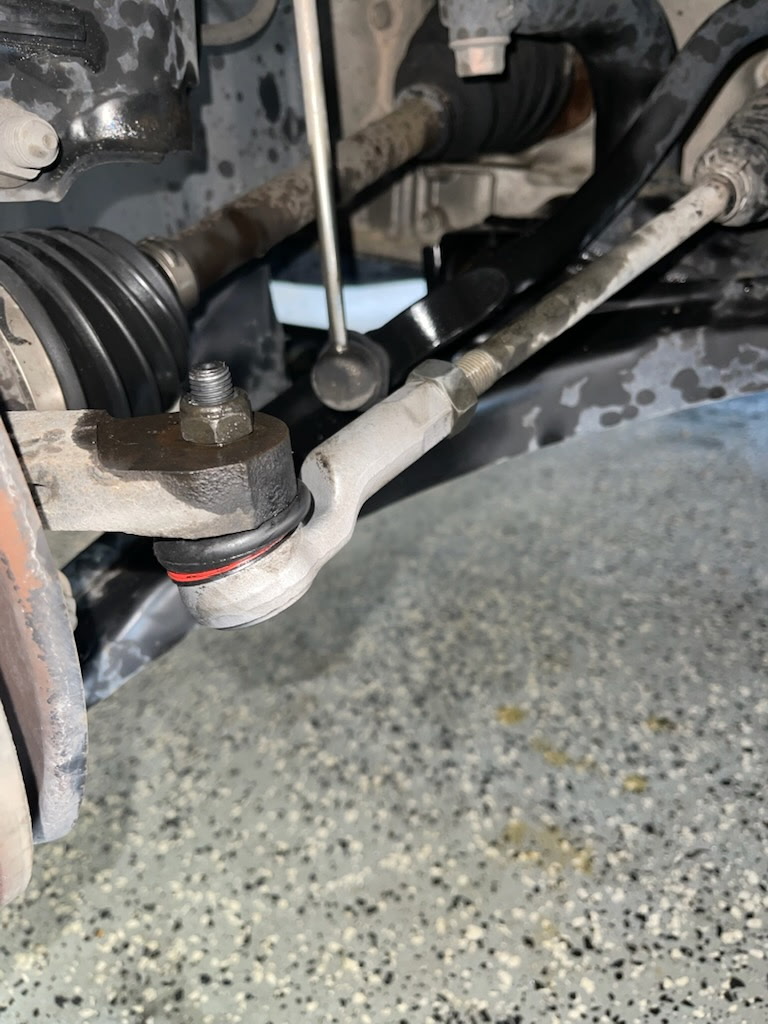
Tie rods are the link between your steering rack and your front wheels. When you turn the wheel left or right, the tie rods are what actually push and pull the wheels to follow. A worn one does not just affect how the car feels. It affects how accurately the car responds to your input, and that matters every time you merge, brake hard, or navigate a curve.
Signs Your Tie Rods Are Telling You Something Is Wrong
Steering Wheel Vibration or Looseness
One of the earliest signs is a vibration in the steering wheel, especially at highway speeds. Some drivers describe it as a shimmy or a wobble that was not there before. Others notice that the steering feels vague, like there is a slight delay between turning the wheel and the car actually responding. That looseness is often the tie rod end moving when it should not be.
Uneven Tire Wear
Worn tie rods throw off your front-end alignment. When alignment is off, your tires do not sit at the correct angle against the road, and they wear unevenly as a result. If you look at your front tires and one edge is significantly more worn than the other, that is worth investigating. It does not always mean tie rods, but it is a common symptom that shows up alongside other steering issues.
Clunking or Knocking Sounds When Turning
A tie rod end that has lost its tight fit will knock around in its housing. You may hear a clunk when you turn into a parking space, or a knocking sound when you go over a bump while the wheel is turned. These sounds tend to get worse over time, not better. Ignoring them usually means the part deteriorates further and the repair becomes more involved.
The Car Pulls to One Side
If your vehicle drifts to one side when you let go of the wheel on a flat road, that can point to a tie rod issue on that side. It can also be a brake problem or a tire pressure issue, so ruling those out first makes sense. But when pulling happens alongside any of the other symptoms above, the tie rod is a strong candidate.
Why Tie Rod Replacement Cannot Wait Indefinitely
A tie rod that fails completely does not give you much warning. The wheel can lose its connection to the steering rack, and at that point you have very little control over where the vehicle goes. That is not a scenario anyone wants to deal with at highway speed on I-30 or any other busy stretch of road in the Fort Worth area.
Catching the wear early, like what is visible in that suspension photo, is what separates a straightforward repair from a roadside emergency. The part itself is not exotic. The labor is not complicated for a mechanic who works on suspension regularly. But the window for doing it on your own terms closes if you wait too long.
What the Replacement Process Involves
Replacing a tie rod end means removing the wheel, disconnecting the old tie rod from the steering knuckle, and threading in the new one at the correct length so the alignment is not thrown off more than necessary. A good mechanic will mark the position of the old tie rod before removing it and try to match that position with the new one. That is not a substitute for a proper alignment afterward, but it keeps the car drivable until you can get one done.
Both inner and outer tie rod ends can wear, though the outer end tends to go first because it takes more stress from road impacts. If one side is worn, it is worth checking the other side at the same time. Doing both at once saves labor time and keeps the steering balanced.
Getting This Handled Without a Tow or a Shop Visit
Suspension work like this is something a Fort Worth mobile mechanic can handle at your home or wherever the vehicle is parked. DFW Mobile Auto Mechanic Pros has been doing this kind of work across the Dallas Fort Worth area since 2012, and tie rod replacement is a regular part of what the team handles in driveways, parking lots, and worksites throughout Fort Worth, Arlington, Grand Prairie, and the surrounding cities.
If you are noticing any of the symptoms described here and want someone to take a look, give them a call at (817) 966-0057. No appointment at a shop required, and no tow truck needed to get the car there.
Find us on Google · More mobile mechanic tips Call (817) 966-0057 anytime.


Comments
Post a Comment