What Your Brake Caliper and Rotor Are Actually Telling You
The Parts You Never See Until Something Goes Wrong
Most drivers never get a look at what's actually happening inside their brakes. You press the pedal, the car stops, and that's the end of it. But underneath your vehicle, there's a system of components working under serious heat and pressure every single day. The caliper and rotor are two of the most critical pieces in that system, and when something starts to fail, the warning signs appear long before your brakes give out completely.
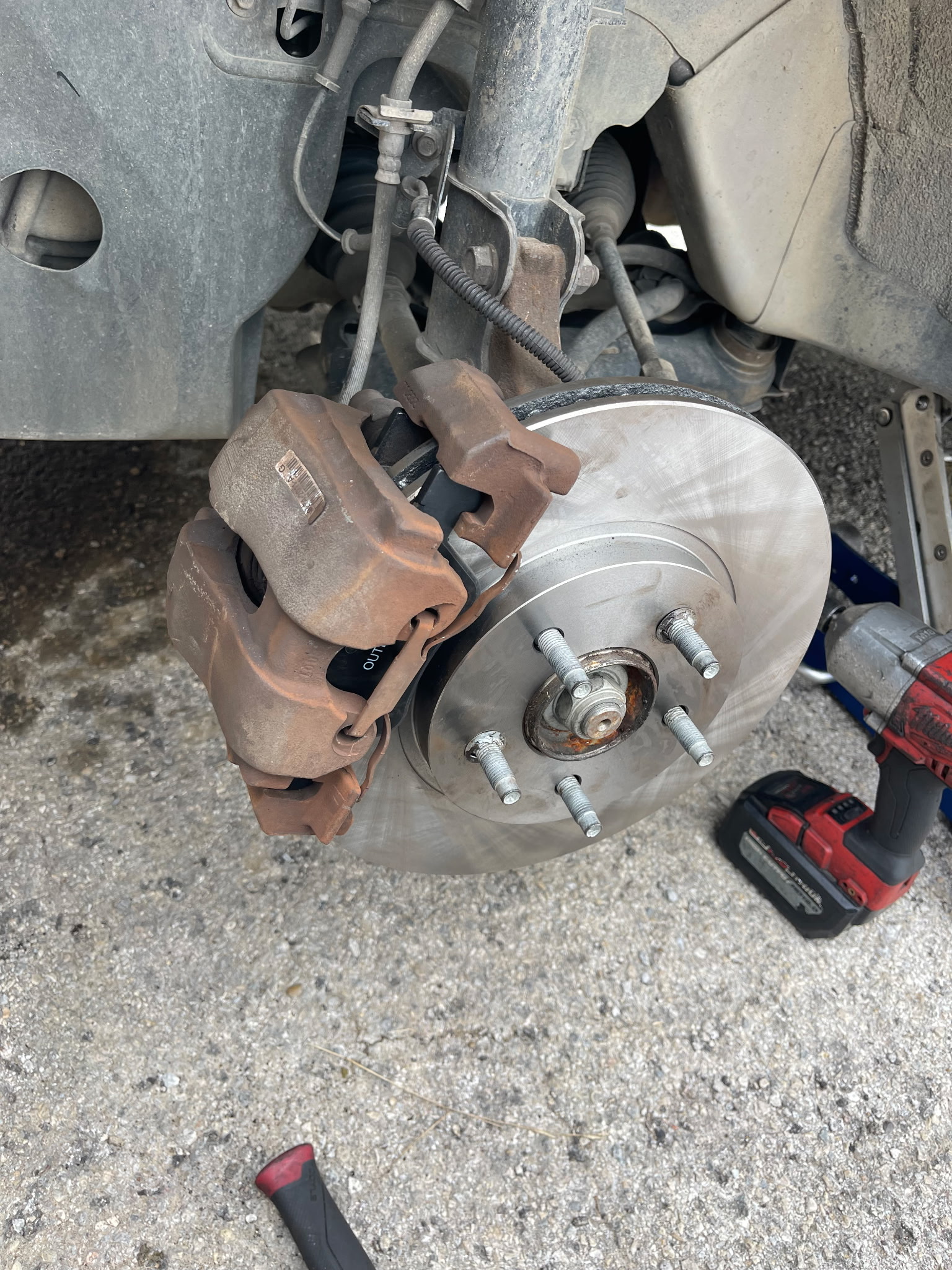
During an undercarriage inspection, the rotor is the large disc mounted to the wheel hub. The caliper wraps around it and holds the brake pads. When you press the brake pedal, hydraulic pressure forces the caliper to squeeze those pads against the rotor, creating the friction that slows your vehicle. It sounds simple, but the tolerances involved are tight, and wear happens gradually in ways most people never notice until it becomes a serious problem.
How a Mechanic Reads Brake Wear Without Removing the Wheel
Rotor Condition
A healthy rotor has a smooth, even surface. What mechanics look for are grooves cut into the face of the rotor, usually caused by worn pads that have ground metal against metal. Deep scoring means the rotor has lost material and may no longer dissipate heat properly. Rotors also develop a lip around the outer edge over time, which tells you how much material has worn away from the center. A pronounced lip usually means the rotor is past its service limit.
Rotors can also warp from repeated heat cycles, especially in stop-and-go traffic. A warped rotor is what causes that pulsing or vibrating sensation through the brake pedal. It is not just annoying. It means your pads are making uneven contact with the rotor surface, which directly reduces stopping power.
Caliper Condition
The caliper itself can fail in a few different ways. A seized caliper piston is one of the more common issues. When the piston does not retract properly after you release the pedal, the pad stays in contact with the rotor. That causes uneven wear on one side, excessive heat buildup, and a vehicle that pulls to one side under braking. One wheel running noticeably hotter than the others after a drive is a clear red flag.
Caliper slide pins are another thing mechanics check closely. These pins allow the caliper to move slightly as the pads wear down. If they are corroded or running dry, the caliper cannot float correctly, and you end up with the same uneven wear pattern that shortens the life of your pads and rotor.
Why Brake Inspections Matter Before You Hear the Squeal
Most people wait for noise before they think about their brakes. That squeal is actually a wear indicator built into the pad, a small metal tab that contacts the rotor when the pad gets thin. By the time you are hearing it consistently, replacement is already overdue. Waiting longer risks scoring the rotor surface, which turns a straightforward pad swap into a more involved and more expensive job.
A visual inspection of the caliper and rotor can catch problems before they reach that stage. Mechanics look at pad thickness, rotor surface condition, caliper hardware, and brake line integrity all in one pass. None of that requires a lift or a shop. It can be done in a driveway or a parking lot, which is exactly where mobile brake service fits in.
Getting Your Brakes Checked Without Going to a Shop
A lot of people in the Fort Worth area put off brake inspections because they do not want to deal with dropping the car off and waiting around. A mobile mechanic can come to your home or workplace, pull the wheel, inspect the caliper and rotor, and give you a straight answer about what actually needs to be done.
DFW Mobile Auto Mechanic Pros has been handling this kind of work across Fort Worth, Arlington, and the surrounding cities since 2012. The mechanics are ASE-certified and carry the parts and tools to handle brake pad replacement, caliper issues, and rotor work on-site. No tow, no shop visit, no waiting room. You can see the full list of services they handle on the Fort Worth mobile mechanic service page.
If your brakes are making noise, pulling to one side, or you simply have not had them looked at in a while, it is worth getting a set of experienced eyes on them. The team is available 24 hours and serves most of the DFW area. Call (817) 966-0057 any time to set something up.
Find us on Google · More mobile mechanic tips Call (817) 966-0057 anytime.


Comments
Post a Comment