What a Worn Wheel Bearing Actually Does to Your Car
A wheel bearing replacement involves removing the old bearing or hub assembly and pressing or bolting a new one into place at the wheel's mounting point. In Fort Worth, this repair is commonly needed on vehicles with high mileage or those that have been driven on rough roads for extended periods. Catching a failing bearing early prevents more serious suspension and safety problems down the road.
What Does a Wheel Bearing Actually Do?
Most drivers know the term but not the function. A wheel bearing is a set of steel balls or rollers held inside a metal ring called a race. It sits inside the wheel hub and allows the wheel to spin freely around the axle with as little friction as possible. Without it, your wheel would grind against the axle and generate enough heat to cause serious damage in a short amount of time.
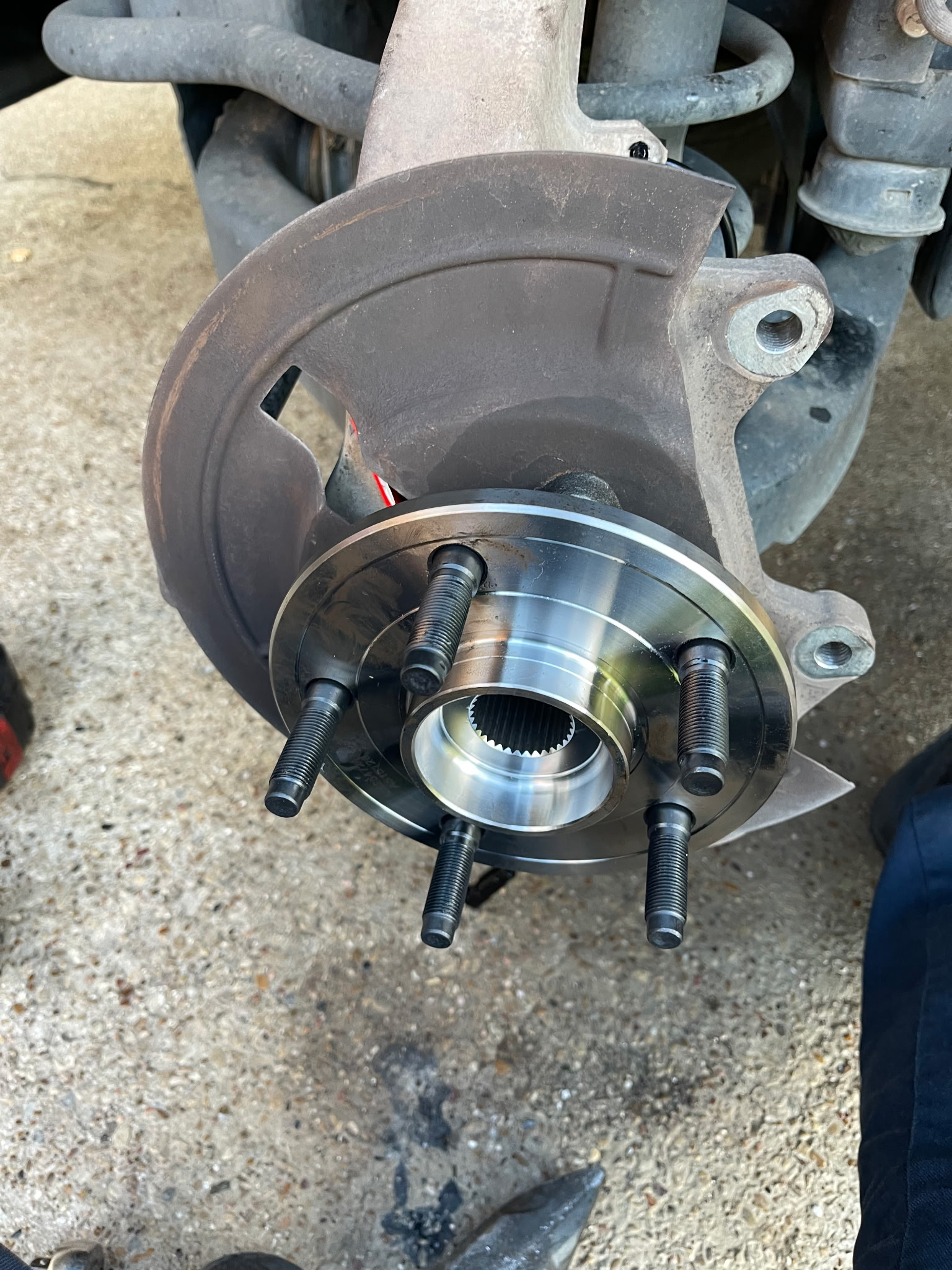
Modern vehicles typically use a sealed hub assembly, which packages the bearing, hub, and sometimes the ABS sensor ring all into one unit. When the bearing fails, the whole assembly usually gets replaced rather than repacking the old bearing the way older vehicles required. That polished spindle with its splines and threading you see on a freshly installed hub assembly is exactly what connects the wheel to the vehicle's suspension and keeps everything tracking straight.
How Do You Know If a Wheel Bearing Is Going Bad?
The Humming or Grinding Noise
The most common symptom is a humming, growling, or grinding noise that changes with vehicle speed. It often sounds similar to road noise at first, which is why a lot of drivers dismiss it early on. The key difference is that a failing bearing tends to get louder as speed increases, and it sometimes shifts in tone when you gently swerve left or right at highway speed. That weight transfer loads and unloads the bearing, changing the sound.
Looseness or Vibration in the Wheel
A worn bearing can develop play, meaning the wheel has a small amount of movement it should not have. A mechanic can check this by grabbing the tire at the 12 and 6 o'clock positions and rocking it. Any noticeable wobble points to a bearing that has worn beyond its tolerance. You might also feel a vibration through the steering wheel or floorboard that does not go away with a tire balance.
ABS Warning Light
On many vehicles, the ABS sensor is built directly into the hub assembly. When the bearing wears and the hub shifts even slightly out of position, the sensor can give false readings and trigger the ABS warning light. If you have a grinding noise alongside an ABS light, the bearing is a logical first place to look before chasing more expensive electrical problems.
Why Does the Hub Assembly Matter as Much as the Bearing?
When a mechanic installs a new hub assembly, the condition of the spindle and surrounding components matters just as much as the quality of the new part. The spindle has to be clean, free of corrosion, and properly threaded so the new hub seats correctly. If the mounting surface is damaged or corroded, even a brand new bearing will wear prematurely or fail to seat with the right preload.
This is one reason wheel bearing work benefits from being done by someone who knows the specific torque specs for your vehicle. Over-tightening the axle nut can preload the bearing too aggressively and shorten its life. Under-tightening leaves the assembly loose. Getting it right the first time is not complicated for an experienced mechanic, but it does require attention to detail and the right tools.
Is It Safe to Drive on a Bad Wheel Bearing?
Short answer: no, not for long. A bearing that has progressed to grinding or wobbling is at risk of seizing. If a wheel bearing seizes while you are driving, the wheel can lock up without warning. At highway speed, that is a serious accident risk. Even before it gets to that point, a failing bearing puts extra stress on the CV axle, the hub, and the surrounding suspension components. Fixing the bearing early usually means fixing only the bearing. Waiting can mean replacing several parts at once.
Drivers in the Fort Worth area who notice any humming that changes with speed or any looseness in a wheel should get it checked sooner rather than later. Mobile mechanics can diagnose and often complete the repair at your home or workplace, which removes the need to drive a vehicle that may not be safe on the highway.
What the Replacement Process Looks Like
The job starts with safely lifting the vehicle and removing the wheel. The brake caliper and rotor come off next to expose the hub assembly. On most modern vehicles, the hub is held on by a central axle nut and a set of mounting bolts at the steering knuckle. The old assembly comes off, the spindle and mounting surfaces get cleaned, and the new hub goes on with the correct torque applied to each fastener.
Reassembly includes the rotor, caliper, and wheel, followed by a torque check on the lug nuts. If the vehicle has an ABS sensor integrated into the hub, the mechanic will verify the light clears after the repair. The whole job typically takes one to two hours depending on the vehicle and how much corrosion is present on the old hardware.
If you want to see the range of suspension and mechanical services available, the Fort Worth mobile mechanic service page covers what can be handled on-site. For a broader look at common repairs and what to expect, the DFW Mobile Auto Mechanic Pros resource hub is worth bookmarking.
If you are hearing a noise you cannot place or you want a second opinion on a bearing diagnosis, DFW Mobile Auto Mechanic Pros is available around the clock. Give them a call at (817) 966-0057 and a mechanic can come to you.
How do I know if my wheel bearing needs to be replaced?
The most common signs are a humming or grinding noise that changes with vehicle speed, a vibration felt through the steering wheel or floorboard, or a slight wobble in the wheel when you rock it by hand. An ABS warning light can also indicate a failing hub-integrated bearing sensor.
How long does a wheel bearing replacement take?
Most wheel bearing replacements take between one and two hours. Vehicles with heavy corrosion on the old hardware or tightly packaged suspension setups can take a bit longer, but it is generally a same-visit repair.
Is it safe to drive with a bad wheel bearing in Fort Worth?
It depends on how far the bearing has worn. Early-stage humming is a warning sign, but a bearing that is grinding or showing wheel wobble is a safety risk. A seized bearing can cause a wheel to lock up without warning, so getting it inspected quickly is the right call.
Can a mobile mechanic replace a wheel bearing at my house?
Yes. Wheel bearing and hub assembly replacement is a standard mobile repair. The mechanic brings the tools and the part, lifts the vehicle at your location, and completes the job on-site without a shop visit or tow.
How much does wheel bearing replacement cost in Fort Worth?
Costs vary based on the vehicle make, model, and which wheel is affected. The best way to get an accurate number is to call for a quote specific to your vehicle, since part prices and labor time differ across different cars and trucks.
Find us on Google Call (817) 966-0057 anytime.
DFW Mobile Auto Mechanic Pros - mobile mechanic serving Fort Worth, TX. (817) 966-0057.


Comments
Post a Comment